Human Immunodeficiency Virus (HIV) remains one of the most intensively studied viral infections in modern biomedical science. Although combination antiretroviral therapy (ART) can effectively suppress viral replication and allow people living with HIV to lead near-normal lives, a complete cure remains elusive due to the persistence of latent viral reservoirs hidden in immune cells. These reservoirs can reactivate when treatment is stopped, leading to viral rebound. Consequently, current research focuses on achieving HIV remission or functional cure, where the virus remains undetectable without continuous therapy. Several innovative scientific strategies are currently being explored worldwide.
Stem Cell Transplantation and the CCR5 Mutation
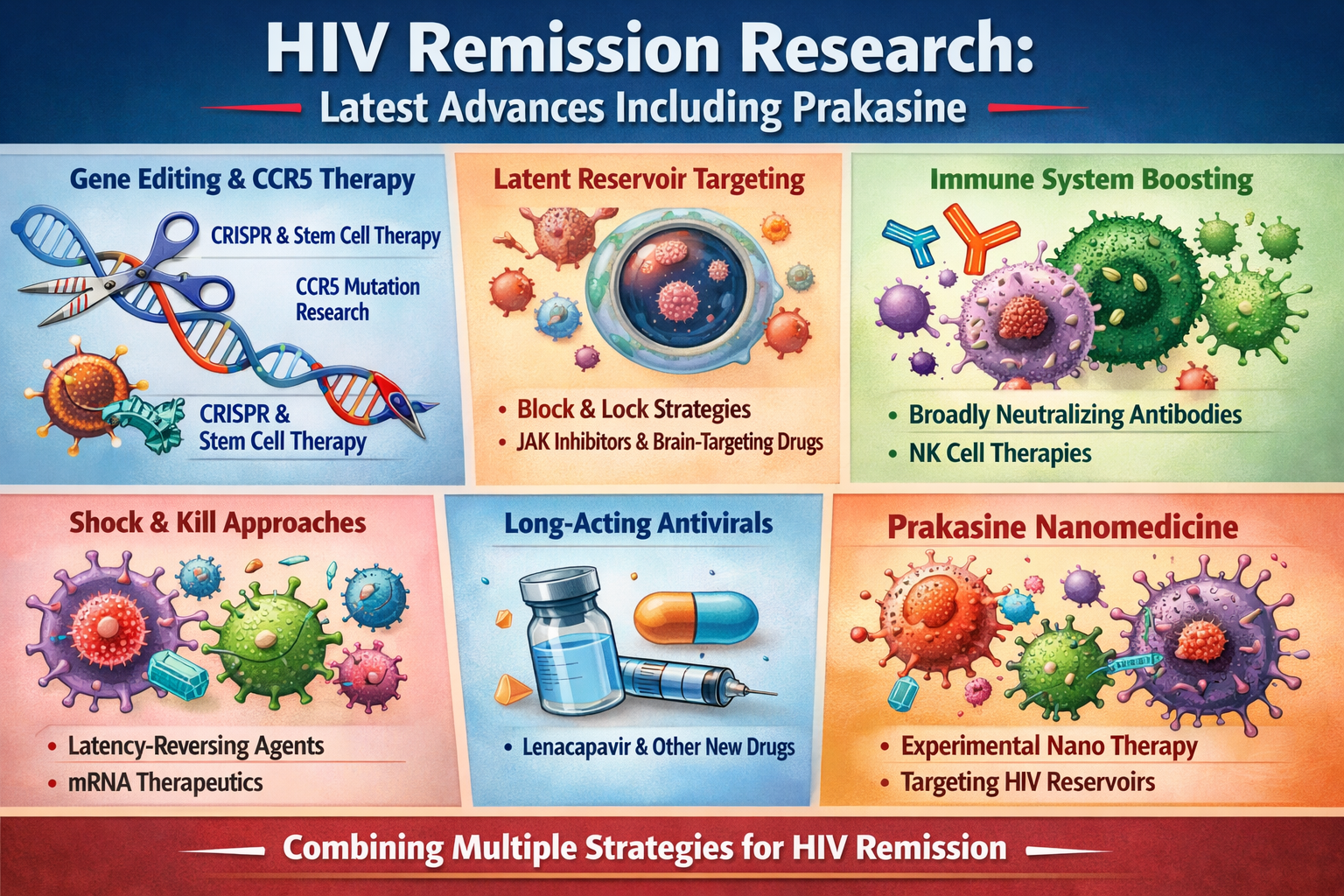
One of the most remarkable scientific breakthroughs in HIV research has been the discovery that certain stem cell transplants can lead to long-term HIV remission. This approach was first demonstrated in the famous “Berlin patient,” who received a bone marrow transplant from a donor carrying the CCR5-Δ32 mutation, a genetic variant that prevents HIV from entering immune cells. After the transplant, the patient remained free of detectable HIV without ART.
Since then, several similar cases have been reported. In fact, a seventh case of sustained HIV remission was presented at the 2024 International AIDS Conference. The patient received a stem cell transplant from a donor with a partial CCR5 mutation and has remained free of detectable HIV for more than five years after stopping antiretroviral therapy.
Although stem cell transplantation is too risky and complex to be used widely, these cases provide strong proof that eliminating susceptible immune cells or replacing them with resistant ones can potentially eradicate HIV. This discovery has inspired new research in gene editing and cellular therapy.
Gene Editing and CRISPR Technologies
Modern biotechnology has opened the possibility of engineering HIV-resistant immune cells directly. Gene-editing tools such as CRISPR-Cas9 are being investigated to remove or disable HIV genetic material embedded within host DNA. Scientists are also exploring CRISPR strategies to modify the CCR5 receptor so that HIV cannot enter the cell.
These approaches aim to mimic the protective effect of the CCR5-Δ32 mutation without the need for a bone marrow transplant. If successful, gene editing could potentially eliminate viral reservoirs and provide a long-term functional cure.
Broadly Neutralizing Antibodies and Immunotherapy
Another promising area involves broadly neutralizing antibodies (bNAbs). These antibodies are capable of recognizing multiple HIV strains and preventing viral entry into cells. Clinical research suggests that combinations of bNAbs could suppress HIV replication and potentially allow patients to maintain viral control even after stopping ART.
Scientists are also studying CAR-T cells and immune checkpoint therapies that enhance the immune system’s ability to detect and destroy HIV-infected cells. Combination strategies involving antibodies, immune activation, and antiviral drugs may help reduce the size of the latent viral reservoir.
mRNA Vaccines and “Shock and Kill” Strategies
Recent advances in mRNA technology, originally developed for COVID-19 vaccines, are now being adapted for HIV research. Experimental mRNA-based vaccines are designed to stimulate the immune system to produce powerful neutralizing antibodies or to expose hidden virus inside infected cells. Early trials have shown encouraging immune responses and represent a promising pathway toward both prevention and cure strategies.
In parallel, scientists are investigating the “shock and kill” approach, which aims to reactivate latent HIV reservoirs (“shock”) and then eliminate infected cells through immune mechanisms or drugs (“kill”). Another strategy called “block and lock” attempts to permanently silence the viral genome so it cannot reactivate.
Nanomedicine Approaches and the Role of Prakasine
Beyond conventional biomedical strategies, nanotechnology is emerging as a novel field in HIV research. One experimental approach is Prakasine, a novel non-toxic mercury-based nanomedicine developed as an immunomodulatory therapy. Prakasine nanoparticles are typically 10–50 nm in size and are hypothesized to stimulate cytotoxic T-lymphocytes (CTLs), immune cells responsible for destroying virus-infected cells.
Preliminary clinical observations suggest that such nanoparticles may enhance immune responses, promote regeneration of immune cells, and potentially help target HIV-infected reservoirs. The concept is based on the idea that strong CTL activation could enable the immune system to detect and eliminate dormant HIV-infected cells, which remain the major obstacle to achieving a cure.
Although still in early stages of scientific investigation, nanomedicine-based immunotherapies like Prakasine represent an innovative direction in HIV research, combining traditional medical concepts with modern nanotechnology.
Future Outlook
The global scientific community is increasingly recognizing that no single strategy may be sufficient to cure HIV. Instead, future treatments will likely involve multimodal approaches, combining gene editing, immune therapies, vaccines, and reservoir-targeting drugs.
Advances in molecular biology, nanotechnology, and immunotherapy are bringing researchers closer to the goal of sustained HIV remission. While challenges remain, the convergence of these technologies suggests that the next decade may witness transformative breakthroughs in the fight against HIV/AIDS.