
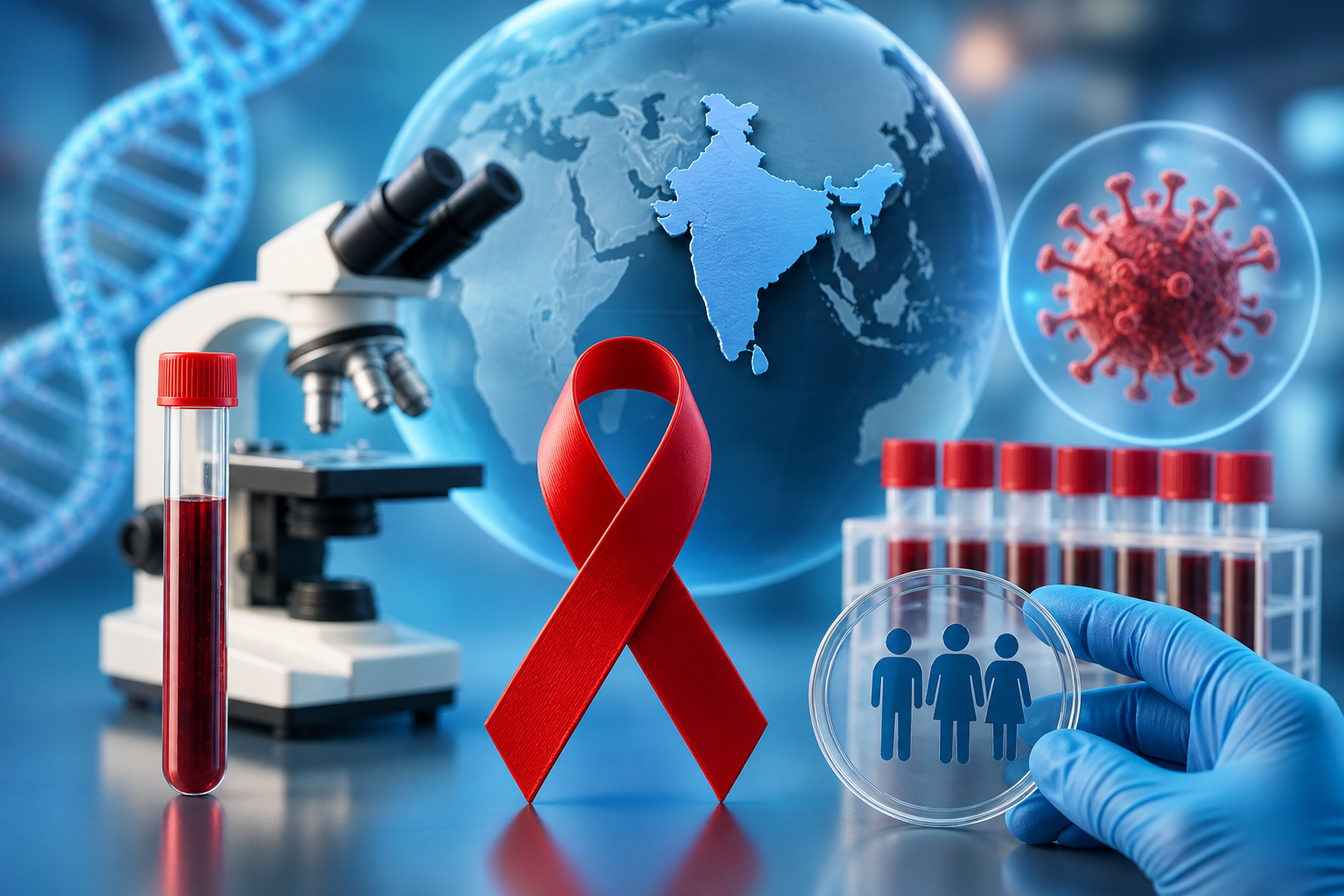
The search for a definitive HIV cure has accelerated globally, and India is emerging as an important contributor in this scientific journey. While antiretroviral therapy (ART) has transformed HIV into a manageable chronic condition, the ultimate goal remains a complete cure or long-term remission without lifelong medication.
For patients, researchers, and healthcare professionals, one common question arises:
Where can we find active HIV cure clinical trials in India?
This article provides a clear, practical guide—along with insights into emerging innovations such as Prakasine, a novel non-toxic mercury-based nanomedicine currently in the preclinical stage.
Understanding HIV Cure Clinical Trials
HIV cure trials typically focus on:
- Sterilizing cure – complete elimination of HIV from the body
- Functional cure – long-term viral suppression without ART
- Immune-based therapies – boosting the body’s ability to control HIV
- Gene editing approaches – targeting HIV at the DNA level
India participates in global and local trials, often through government-supported research institutions and international collaborations.
1. Clinical Trials Registry of India (CTRI)
The primary and most reliable source is the
Clinical Trials Registry of India
- Website: https://ctri.nic.in
- Managed by: Indian Council of Medical Research
How to Use CTRI:
- Search using keywords like:
- “HIV cure”
- “HIV remission”
- “HIV immunotherapy”
- Filter by:
- Recruitment status (Active/Recruiting)
- Study type (Interventional)
This registry lists all officially approved clinical trials in India, making it the first place to check.
2. Major HIV Research Institutions in India
Several premier institutes regularly conduct HIV-related trials:
Key Centers:
- National Institute for Research in Tuberculosis
- National AIDS Research Institute
- All India Institute of Medical Sciences
These institutions often collaborate with global organizations such as:
- UNAIDS
- World Health Organization
What to Do:
- Visit their official websites
- Check “Research” or “Clinical Trials” sections
- Contact study coordinators directly
3. International Clinical Trial Platforms
Some Indian trials are part of global studies and may not always appear prominently in local listings.
Useful Platforms:
- ClinicalTrials.gov (U.S.-based global registry)
- WHO International Clinical Trials Registry Platform
Search using:
- Location: India
- Condition: HIV
- Status: Recruiting
4. Hospitals and ART Centers
Government and private hospitals conducting HIV care may participate in trials:
- ART centers under National AIDS Control Programme (NACP)
- Large tertiary hospitals in metro cities
Doctors at these centers can:
- Inform eligible patients
- Refer to ongoing clinical trials
- Help assess eligibility criteria
5. Emerging Indian Innovations: The Role of Prakasine
India is not only participating in global trials but also developing indigenous innovations.
One such promising candidate is Prakasine, a novel non-toxic mercury-based nanomedicine developed through decades of research.
Current Status:
- Preclinical stage
- Demonstrated:
- Immunomodulatory activity
- Antiviral effects in HIV in-vitro models
- Anti-tumor activity in animal studies
- Extensive non-toxicity across multiple species
Future Potential:
With government support, regulatory facilitation, and scientific collaboration, Prakasine has the potential to:
- Enter clinical trials in India
- Contribute to functional HIV cure strategies
- Offer a cost-effective, indigenous solution
At present, collaboration is actively solicited from:
- Government agencies
- Research institutions
- Clinical investigators
6. Important Tips Before Joining a Trial
Before enrolling in any HIV clinical trial:
- Verify registration in CTRI
- Check ethics committee approval
- Understand:
- Risks and benefits
- Inclusion/exclusion criteria
- Consult your treating physician
Conclusion
India offers multiple pathways to access HIV cure clinical trials—from national registries to premier research institutes and global platforms. While current options may still be limited, the landscape is rapidly evolving.
Innovations like Prakasine highlight India’s potential to contribute significantly to the global HIV cure effort—provided there is timely support and collaboration.