Introduction
The search for a definitive HIV cure has entered a transformative era with the emergence of advanced technologies such as gene editing. Scientists worldwide are exploring methods to eliminate HIV at its genetic root. At the same time, innovative immunotherapeutic approaches like Prakasine, a novel non toxic mercury based nanomedicine, are demonstrating promising results through immune system modulation.
This article explores the comparison between gene editing technologies and Prakasine, highlighting their mechanisms, advantages, limitations, and potential integration in future HIV cure strategies.
What is Gene Editing in HIV Cure Research?
Gene editing refers to technologies that allow precise modification of DNA sequences. In HIV research, tools such as CRISPR Cas9 are being used to:
- Remove or inactivate HIV proviral DNA embedded in host cells
- Modify host receptors like CCR5 to prevent viral entry
- Engineer immune cells to resist HIV infection
Key Advantages of Gene Editing
- High precision targeting of viral or host genes
- Potential for permanent or sterilizing cure
- Ability to directly eliminate viral reservoirs
Challenges of Gene Editing
- Difficulty in delivering editing tools to all infected cells
- Risk of off target genetic mutations
- Ethical and regulatory concerns
- High cost and infrastructure requirements
Despite its promise, gene editing remains largely in experimental or early clinical stages.
Understanding Prakasine in HIV Therapy
Prakasine is a novel non toxic mercury based nanomedicine developed over decades, with extensive characterization and safety validation across multiple biological systems.
Unlike gene editing, Prakasine does not alter DNA. Instead, it works by activating and modulating the immune system.
Mechanism of Action of Prakasine
- Induces cytokines such as IL 2, IL 6, IL 12, TNF alpha, and interferon gamma
- Enhances Natural Killer (NK) cell activity
- Stimulates Cytotoxic T Lymphocyte (CTL) responses
- Promotes immune mediated clearance of infected cells
Evidence Supporting Prakasine
- Demonstrated non toxicity in multiple animal models
- Immune activation confirmed through cytokine profiling
- In vitro HIV studies in PBMC models show viral load reduction
- Observed anti tumor and immunomodulatory effects
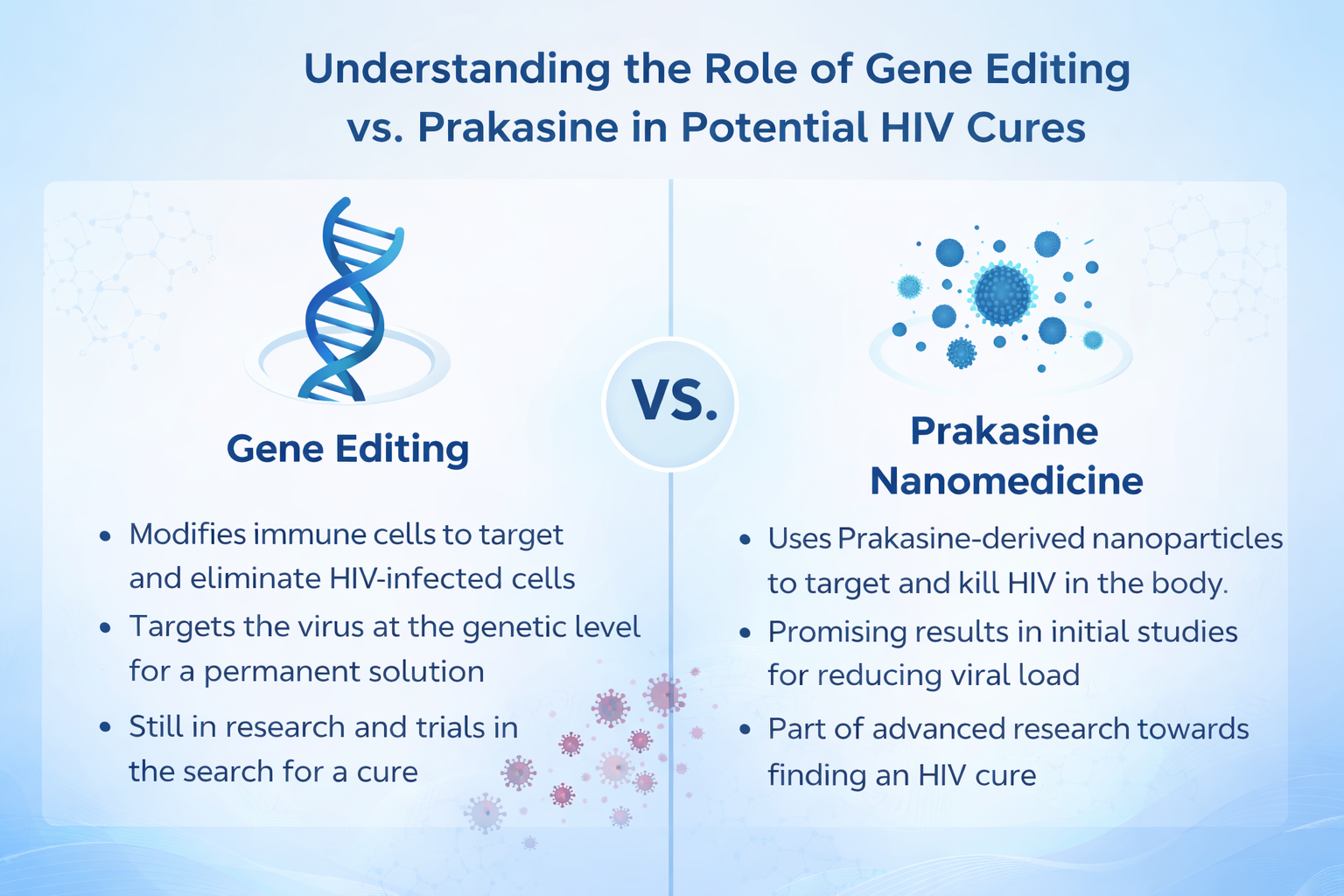
Gene Editing vs Prakasine: A Comparative Perspective
1. Approach to HIV Cure
- Gene Editing: Directly modifies or removes viral DNA
- Prakasine: Enhances immune system to eliminate infected cells
2. Complexity and Accessibility
- Gene Editing: Highly complex, requires advanced infrastructure
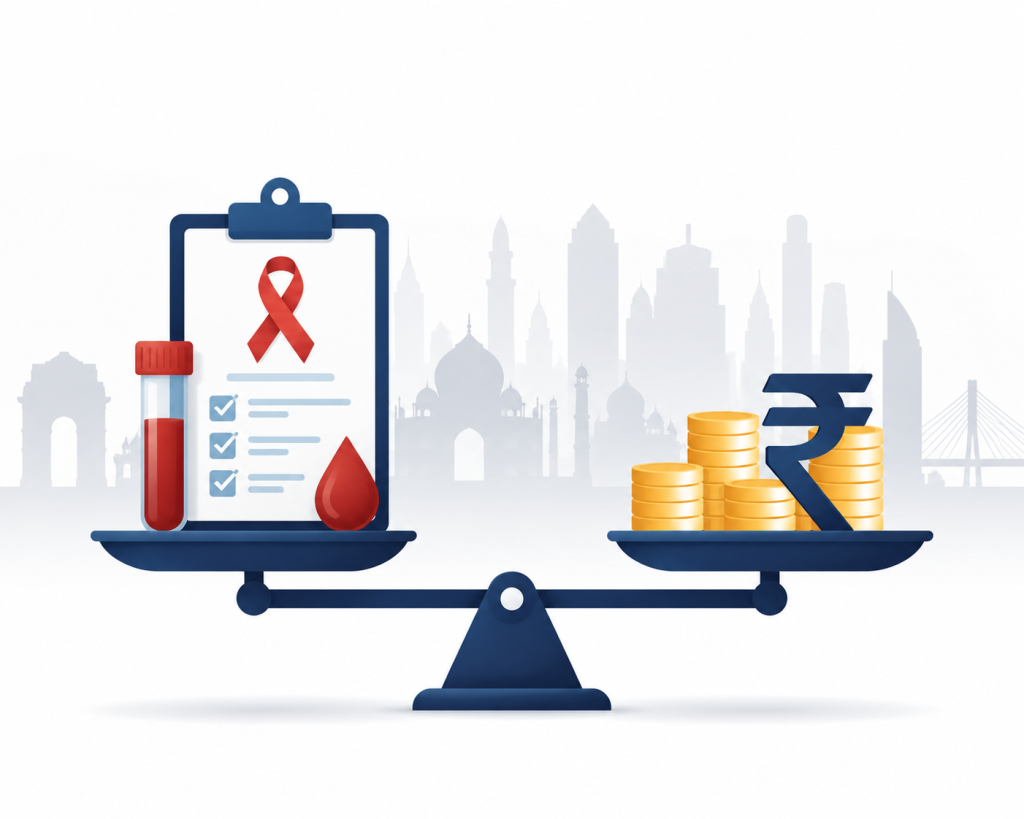
- Prakasine: Scalable and potentially accessible in broader healthcare settings
3. Safety Profile
- Gene Editing: Concerns about off target effects and long term genetic risks
- Prakasine: Demonstrated non toxicity in preclinical models
4. Stage of Development
- Gene Editing: Experimental and early clinical trials
- Prakasine: Supported by extensive laboratory and preclinical data with translational potential
Can Gene Editing and Prakasine Work Together?
A critical insight in modern HIV research is that no single approach may be sufficient to completely eradicate the virus.
A combined strategy could involve:
- Gene editing to reduce or eliminate latent viral reservoirs
- Prakasine to enhance immune clearance of remaining infected cells
- Long term immune surveillance to prevent viral rebound
Such a multi modality approach could significantly increase the probability of achieving a functional or sterilizing cure.
Future of HIV Cure Research
The future of HIV cure lies in integration, not competition. Technologies like gene editing represent precision medicine, while Prakasine represents immune based therapeutic innovation.
For countries like India and other resource limited settings, scalable solutions like Prakasine could play a crucial role in bridging the gap between cutting edge science and real world accessibility.
Conclusion
Gene editing offers a powerful but complex pathway toward HIV eradication at the genetic level. Prakasine, on the other hand, provides a promising, safe, and scalable immunological approach.
Understanding both strategies highlights a key truth in HIV cure research:
The most effective solution may emerge from combining advanced genetic tools with immune system based therapies like Prakasine.